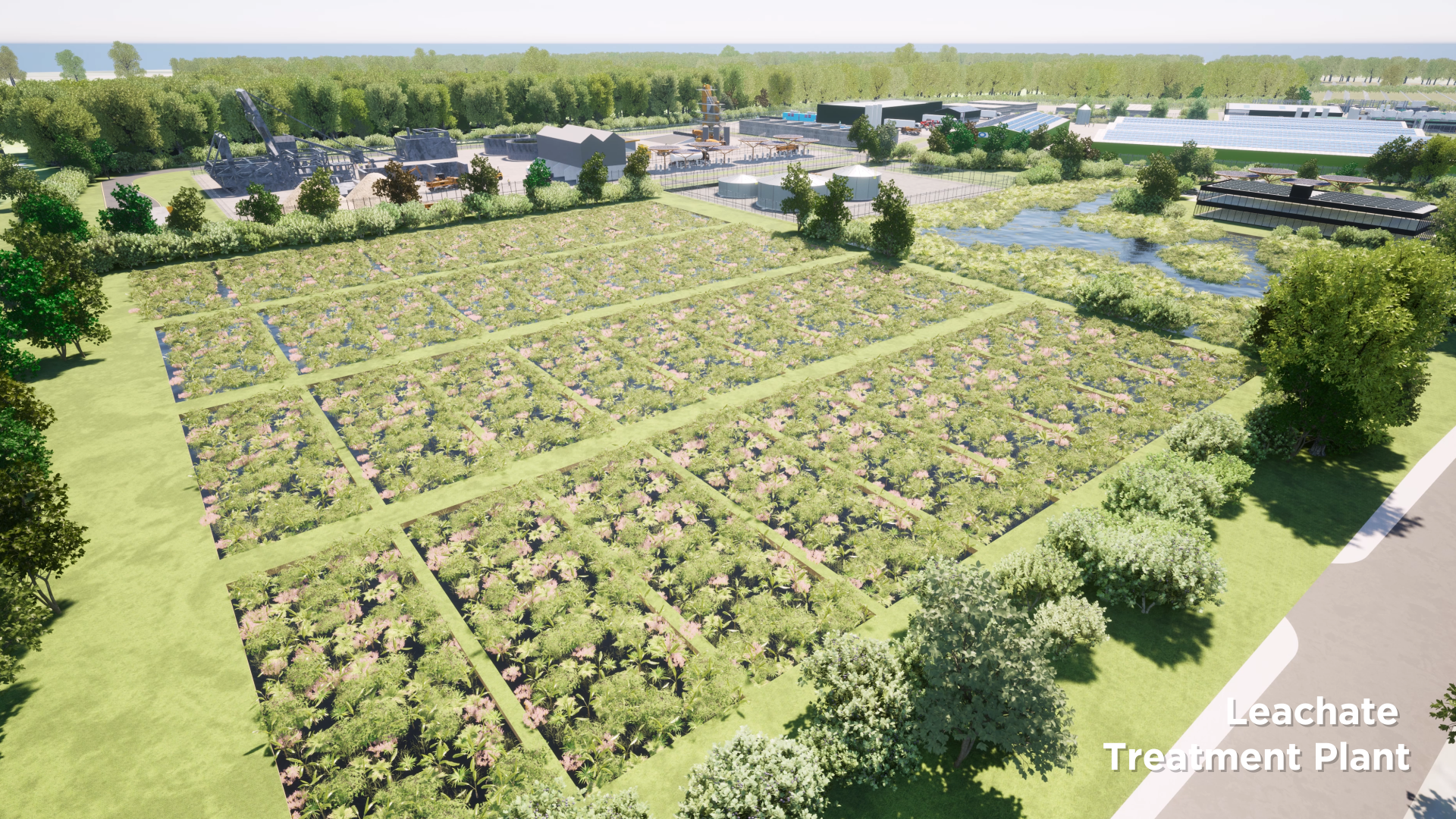
Leachate and Water Treatment
Currently, Tarmac collects a liquid known as ‘leachate’ from the Cotesbach landfill site. This liquid, a by-product of rainwater filtering through the waste, needs to be treated. At present, this involves loading the leachate into tankers—around 10 lorry loads per day—and transporting it off-site for disposal. This process is costly and has a significant environmental footprint due to the vehicle emissions and traffic. The proposed solution – an on-site treatment facility.
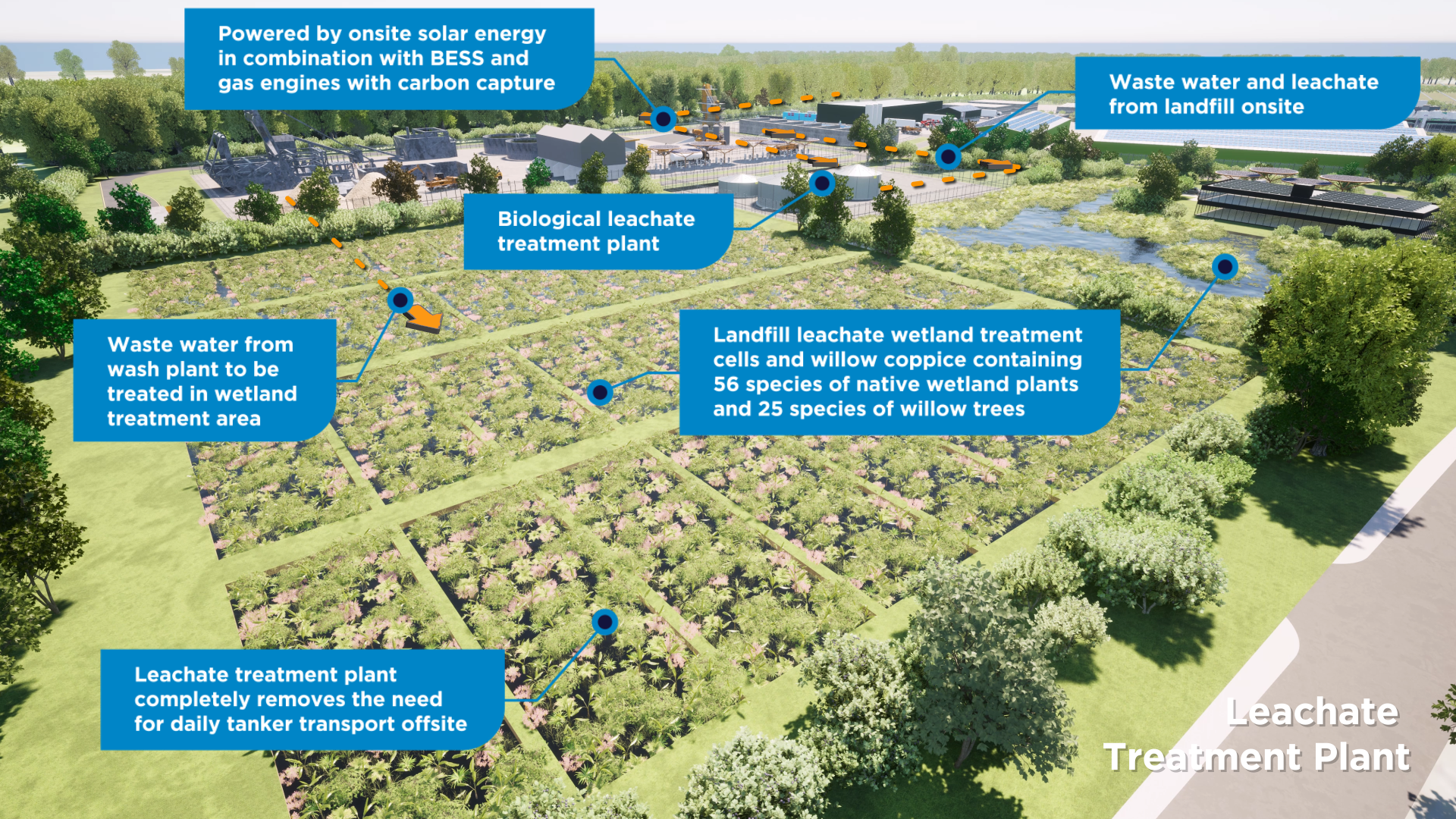
To create a more sustainable and environmentally friendly solution, the proposal is to build a self-contained, on-site water treatment facility. This facility will clean the leachate to a high standard, allowing it to be re-used in other on site processes (e.g., in the aggregate washing plant) or safely discharged into a local river, a plan which we would discuss and agree with the Environment Agency before adopting this approach. The new system is designed to treat up to 300 cubic metres (300m3), or 300,000 litres of leachate every day.
The project will completely eliminate the need for daily tanker transport, reducing traffic on local roads, as well as noise and carbon emissions. The chosen solution uses a combination of two proven technologies: a biological treatment plant and a specially constructed wetland ecosystem.
Reusing Treated Water On-Site
How the system works
Stage 1: The Biological Treatment Plant
1.Balancing: Raw leachate taken from the landfill is first pumped into a Raw Leachate Balancing Tank (RLBT). This tank holds the liquid to ensure a steady, controlled flow into the main treatment process
2. Cleaning with Bacteria: From the balancing tank, the leachate enters the main treatment tank, called a Sequencing Batch Reactor (SBR). Inside this large, insulated tank, a natural process called aerobic biodegradation takes place. Essentially, good bacteria are used to break down the pollutants in the leachate, primarily converting ammonia into harmless nitrogen gas and organic compounds into carbon dioxide and water. This is a well-proven and reliable method for cleaning leachate.
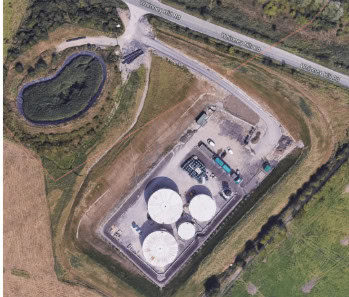
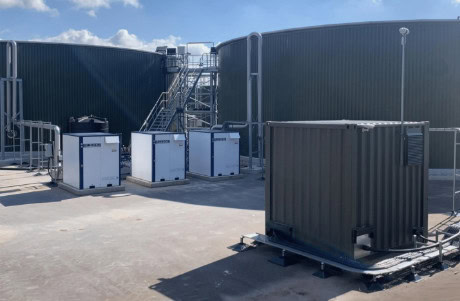
3. Holding: After treatment in the SBR, the cleaned water (effluent) flows into an Effluent Balancing Tank (EBT) before being sent to the final polishing stage. For safety, all the main tanks will be situated within a large, reinforced concrete containment basin, or ‘bund’, to prevent any spills from reaching the environment.
Stage 2: The Constructed Wetlands (Natural Polishing)
The water coming from the treatment plant is already significantly cleaner, but for release into a river, it requires a final ‘polishing’ step. This will be achieved using a purpose-built Ecological Treatment System (ETS), also known as a constructed wetland.
What it is: The ETS will be a large, landscaped area of approximately 1.6 hectares (equivalent to about 2.5 football pitches) containing a series of wetland cells and a willow coppice. It will be carefully planted with up to 56 different species of native wetland plants and 25 species of willow trees.
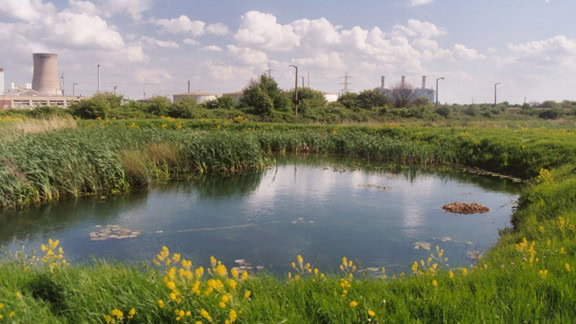
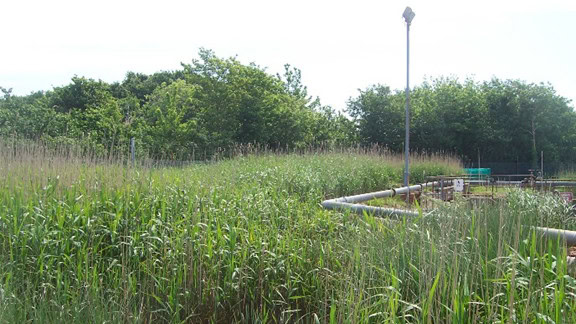
The water from the plant will slowly filter through the soil, gravel, and dense root systems of the plants. The natural combination of plants, fungi, and bacteria will work together to trap and break down the remaining trace contaminants, just as they do in natural marshes. This system is specifically designed to be effective at removing persistent pollutants, including substances known as PFAS and POPs. A major advantage of this ecological approach is that it creates a valuable new wildlife habitat, which will enhance the area’s biodiversity.
The result of this two-stage process will be clean water that meets the strict quality standards required by the Environment Agency for safe discharge into the local watercourse.

Repurpose, Reenergise, Reinvent our world: Cotesbach 2030
Get in touch:
If you have a question to ask or want to contact a member of our team, please do not hesitate to get in touch with us.
- Email info@cotesbach-development.co.uk
- Call our freephone information line on 0800 699 0081 and leave a voicemail (Mon-Fri, 9am-5pm, excluding public holidays)
- Write to us at FREEPOST TC CONSULTATION (no further address or stamp required)