
The Project
Tarmac is bringing forward proposals for our Cotesbach site in Leicestershire. Our plans would transform a long‑serving quarry and landfill into a UK‑first, sector‑leading circular economy hub—diverting waste from going to landfill and turning this into resources, generating clean energy, and establishing Cotesbach as a flagship for sustainable waste management in the UK.
What is a circular economy?
Our approach to circularity
Tarmac, a CRH company, is the UK’s leading sustainable building products, construction services and solutions business. We are committed to driving forward sustainability efforts across all parts of our business, including focusing on how we can transition our day-to-day operations to align with the principles of the circular economy.
We have set ourselves ambitious goals to help measure our progress in achieving our transition to a circular economy within the business. This means designing out waste from every stage of a product’s life cycle and extending its useful life, as well as creating collaboration across the construction supply chain in order to eliminate waste from our operations, recycle materials from other industries, and identify opportunities to conserve water and other resources. Our ambitious goals to support the transition to the circular economy at Tarmac include:


What is a circular economy and how does co‑location help?
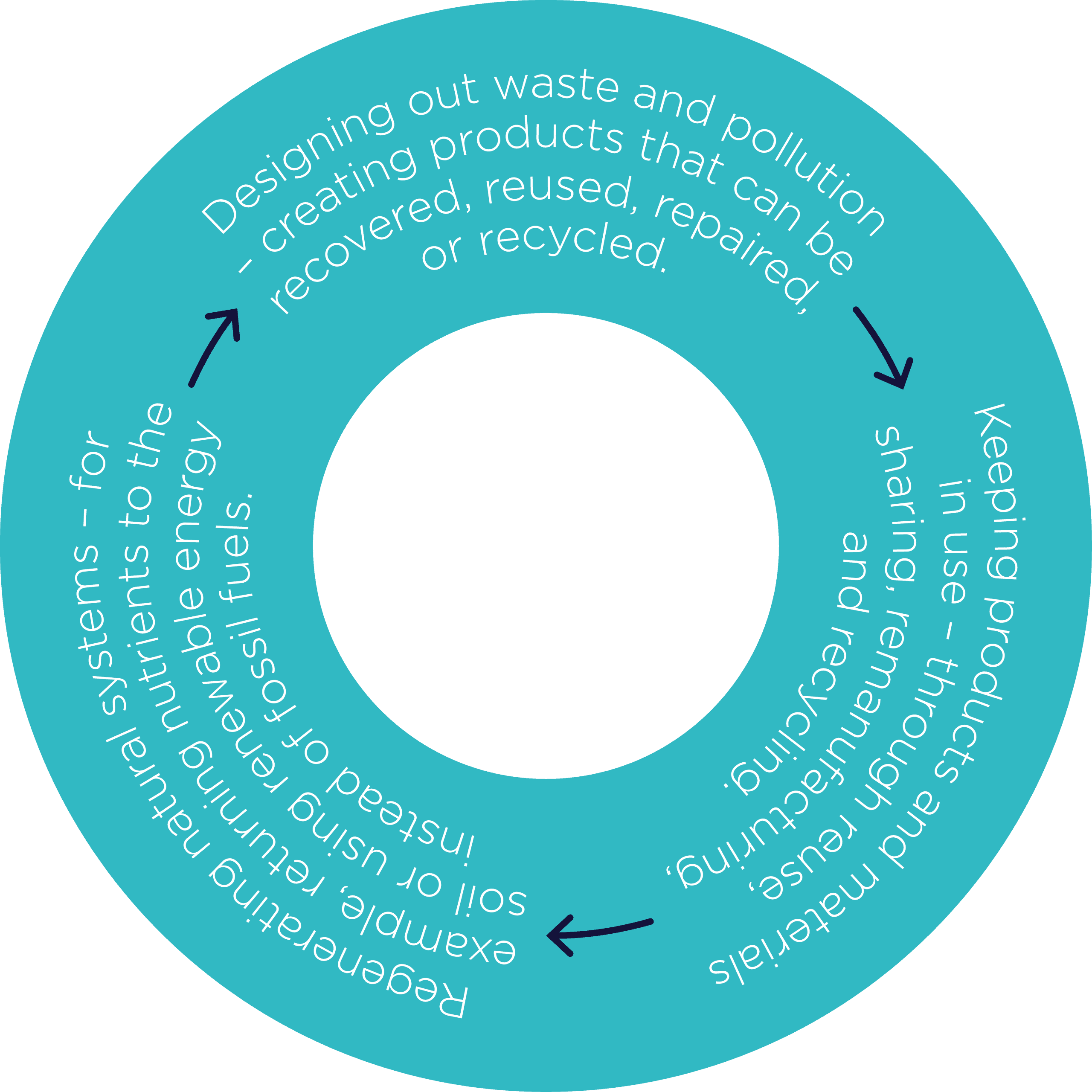
A circular economy is an economic model designed to reduce waste and make the most of resources. Instead of the traditional ‘linear’ economy (“take → make → use → dispose”), the circular approach keeps products, materials, and resources in use for as long as possible.
At its core, it’s about closing the loop of production and consumption. This involves:
- Designing out waste and pollution – creating products that can be recovered, reused, repaired, or recycled.
- Keeping products and materials in use – through reuse, sharing, remanufacturing, and recycling.
- Regenerating natural systems – for example, returning nutrients to the soil or using renewable energy instead of fossil fuels.
A simple example: instead of throwing away an old phone, parts could be repaired, refurbished, or recycled.
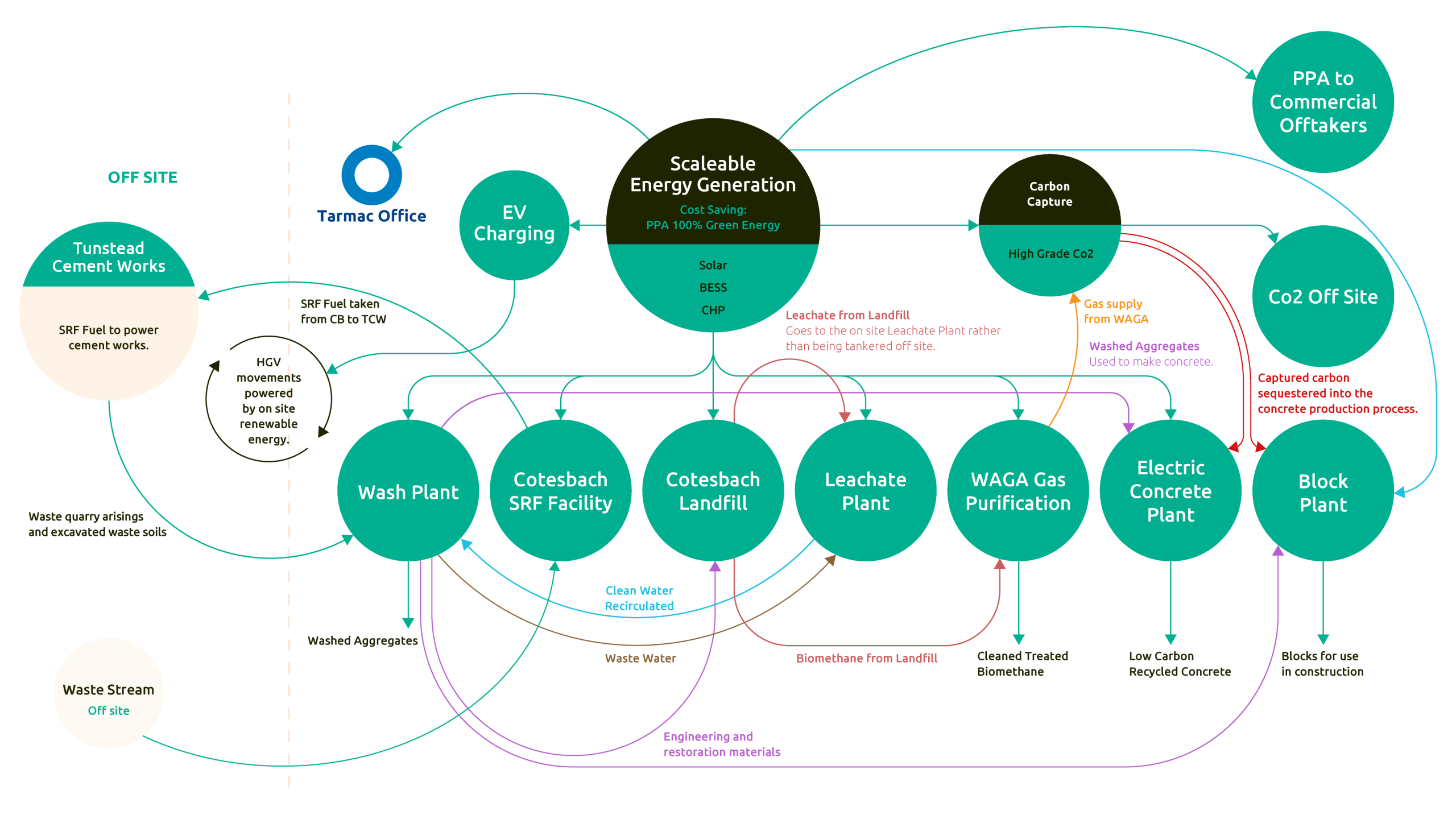
At Cotesbach, we have deliberately brought together multiple processes which sit side‑by‑side and complement each other, so that outputs from one can become inputs for another.
How key technologies work (at a glance)
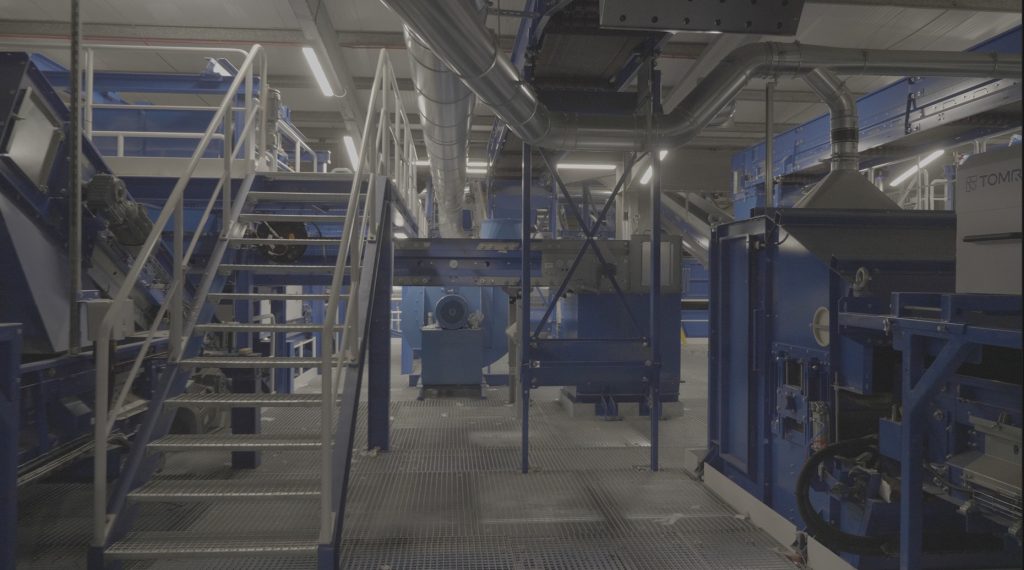

Solid Recovered Fuel (SRF) plant
- The plant sits inside the existing buildings with quiet, modern cladding and solar panels on the roof to power it.
- We’ll turn non-recyclable household waste into a cleaner fuel (SRF) instead of sending it to landfill—around 200,000 tonnes a year
- That fuel replaces coal at Tarmac’s cement plant, cutting carbon. Compacting the loads means fewer lorry trips, and we’ll use biomethane or electric trucks.


Aggregate/stone-washing planting
- We’ll take local construction rubble and wash and sort it into new sand and gravel that can be used again (for example, in concrete).
- The water is cleaned and reused in a closed loop (topped up with treated water from the site), so we use very little new water and don’t discharge dirty water.
- Designed for up to 100 tonnes an hour, run by a small team; most noise comes from loading vehicles, not the wash plant itself.


Electric concrete plant
- An all-electric plant mixes cement, sand and gravel to make ready-mix concrete—cleaner and quieter, especially with power from on-site renewables.
- Because it sits next to the wash plant, sand and gravel can move by short conveyor, meaning far fewer lorry movements and quicker, “just-in-time” production.
- Using recycled aggregates on site makes the process more sustainable and keeps quality consistent.

Block plant
- An all-electric plant mixes cement, sand and gravel to make ready-mix concrete—cleaner and quieter, especially with power from on-site renewables.
- Because it sits next to the wash plant, sand and gravel can move by short conveyor, meaning far fewer lorry movements and quicker, “just-in-time” production.
- Using recycled aggregates on site makes the process more sustainable and keeps quality consistent.
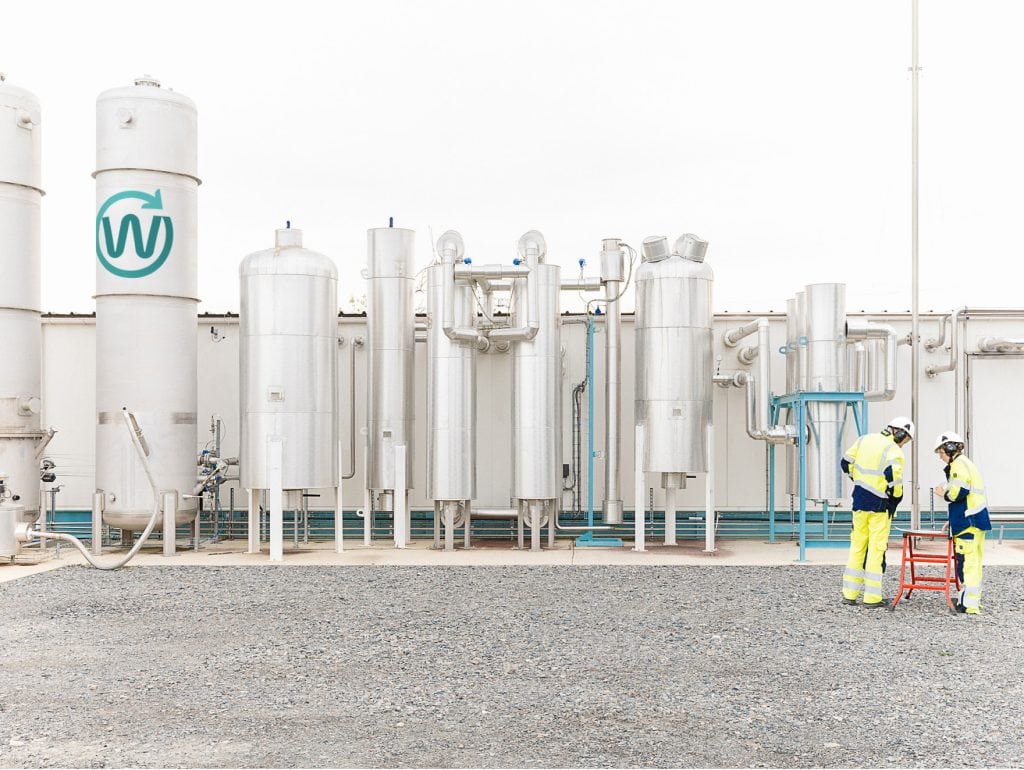

Gas purification plant
- We’ll capture gas made naturally by the landfill and clean it into biomethane (a green version of natural gas) for homes and businesses.
- A short, underground pipeline (~1.4 km) links the site to the national gas network, so the gas goes straight into the grid.
- CO₂ is captured during the process and put to use instead of being released.
Leachate plant
- The site currently trucks leachate (dirty water from the landfill) off site. A new on-site plant will treat up to 300,000 litres a day, ending daily tanker trips.
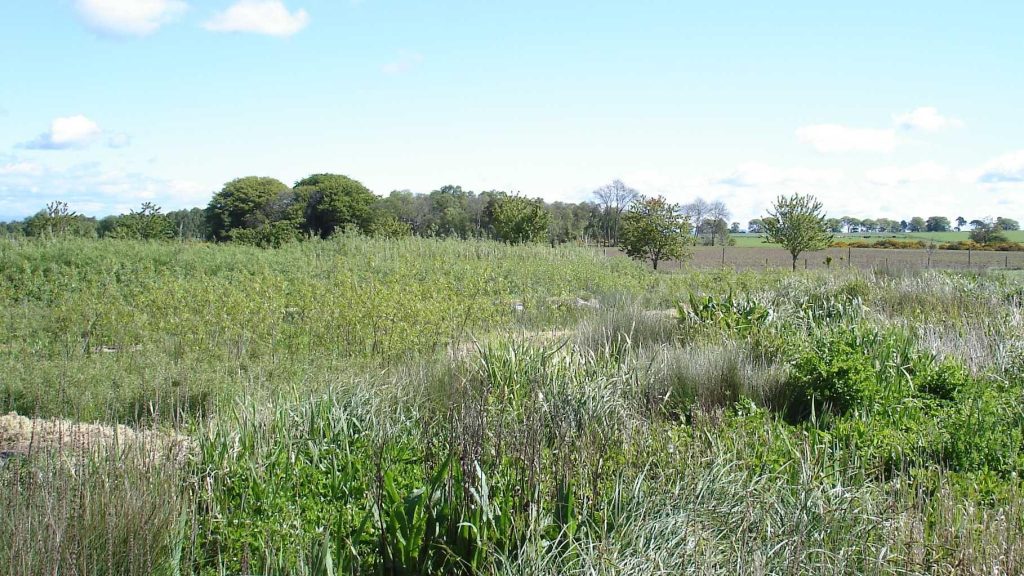
- Treatment has two steps: a proven biological process (good bacteria clean the water) and a constructed wetland (a planted reedbed) for final “polishing.”
- The clean water can be reused on site (e.g., in the wash plant) or safely released with Environment Agency approval.

Solar and BESS (Battery Storage)
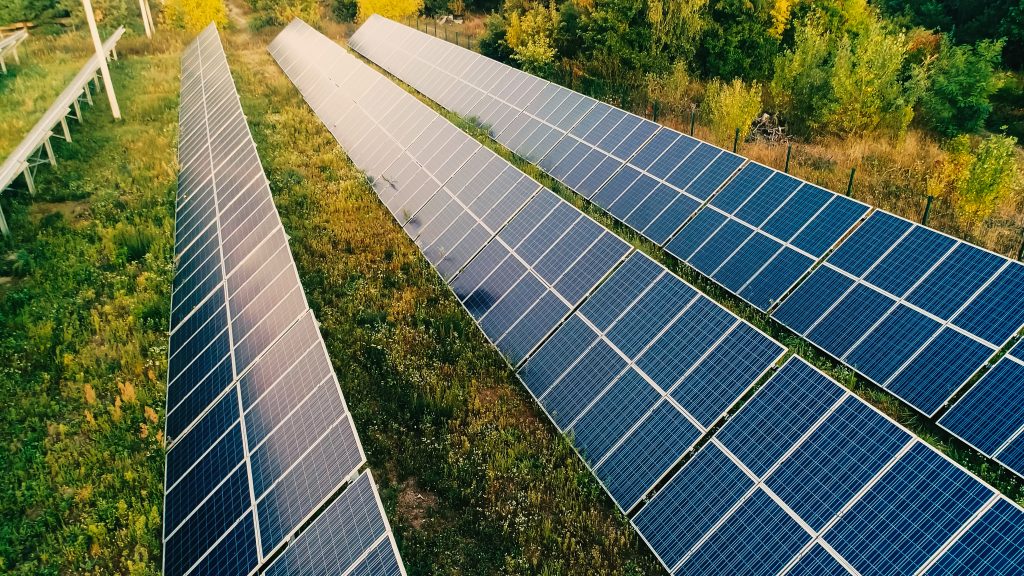
- A smart micro-grid will power the whole site using solar panels, a large battery, and a generator running on our own biomethane—so the site can run without using the national grid.
- Waste heat and carbon capture make the system highly efficient; most CO₂ is captured and can be sold for useful purposes.
- Tarmac buys this green power through a fixed-price agreement, meaning no upfront cost and lower, predictable bills.

Nature reserve
- As part of our focus on the remediation and repurposing of the existing quarry and landfill at Cotesbach, our plans would deliver an enhanced nature reserve, extending to around 146 hectares.
- The proposed nature reserve at Cotesbach would embrace Lawtons principles of a ‘bigger, better and more connected’ landscape and with this providing a rich tapestry of habitats, supporting some of the UK’s most endangered species.
- A mix of scrub, hedgerows, grasses and bare ground will in turn support a wealth of biodiversity, which is crucial when considering the changing climate and the overall biodiversity loss impacting our planet.

Benefits
Establishing Cotesbach as an exemplar circular economy hub
The project will transform operations at the Cotesbach Landfill and establish the site as a UK-first exemplar site for recycling, clean energy generation, and nature recovery. Utilising the site’s unique location, the sector-leading co-location and combination of technologies will reduce landfill use and promote innovation in sustainable construction and waste management.
Delivering major investment in Leicestershire
The proposals represent a multi‑million‑pound private investment and a long‑term vote of confidence in Leicestershire’s economy. The project would create around 50 new skilled jobs on site, support many more in the local supply chain during construction and operation, and generate reliable business rates revenue for public services over the life of the facility.
Reductions in HGV traffic
HGV trips will still be required, but by co-locating and combining plants and processes which complement each other and enable circularity between plants and processes on-site, the proposals will aim to significantly reduce the number of HGV trips required to and from the site compared to the existing planning permission for the site.
The on-site leachate treatment plant will eliminate HGV movements currently required for off-site waste liquid disposal. Direct material transfer between plants via conveyor systems will also remove the need for multiple transport stages between the aggregate washing and concrete production facilities.
Delivering real benefit for Cotesbach and Shawell
Tarmac’s proposals for Cotesbach go beyond creating a national exemplar in circular waste management — they are designed to deliver real, lasting benefits for local communities in Cotesbach, Shawell, and the wider area. The enhanced, publicly accessible, nature reserve will transform part of the site into a green space that supports community wellbeing, access to nature and creates opportunities for residents to walk, exercise, and enjoy the outdoors.
Alongside the new jobs, training, and supply chain opportunities, Tarmac will also work with Leicestershire County Council and consultees to agree appropriate contributions to support local services, infrastructure, and community projects as part of the planning process. Furthermore, by modernising and transforming operations at Cotesbach, we will also tackle key issues which have previously been raised by neighbouring communities, such as reducing litter, cutting odours, and reducing traffic to and from the site, all of which will help to create a cleaner and more sustainable future for the site and its neighbours.
Driving forward net zero and energy security
At the centre of our innovative plans to modernise the Cotesbach site is clean, green, and sustainable renewable energy generation. Driven by the integration of a 30MW solar installation and 10MWh BESS facility, our proposals would not only ensure that on site operations can be self-sustaining, but would also have the potential to be exported directly to neighbouring economic hubs (e.g., Magna Park) via direct connections as well.
Generating sustainable, reliable, green energy on-site from waste materials and renewable sources will enable the proposed development to relieve pressure on the national grid, freeing up capacity for other industries to grow. Whilst the on-site solar farm will provide a resilient combined energy system to power the new on-site plants, the SRF and gas purification facilities would produce alternative sources of fuel. This would enable cleaned biomethane to be plugged directly into the gas network to help power and heat people’s homes.
Through a careful and deliberate design, our plans for Cotesbach will provide a roadmap for reducing the reliance on fossil fuels and imported energy, whilst also providing an exemplar for decarbonisation across waste management and construction.
A nature-led approach
An enhanced nature reserve is at the heart of our vision for the next chapter at Cotesbach. This will promote access to nature for local people through a network of connected new footpaths and recreation opportunities and will bring the site back into public use. Extensive planting of trees, hedgerows and wildflowers is also proposed within the nature reserve, and across the entire site, ensuring that the future for Cotesbach is driven by nature-led recovery and delivers significant boosts to biodiversity.

Repurpose, Reenergise, Reinvent our world: Cotesbach 2030
Get in touch:
If you have a question to ask or want to contact a member of our team, please do not hesitate to get in touch with us.
- Email info@cotesbach-development.co.uk
- Call our freephone information line on 0800 699 0081 and leave a voicemail (Mon-Fri, 9am-5pm, excluding public holidays)
- Write to us at FREEPOST TC CONSULTATION (no further address or stamp required)