Aggregate Washing Plant
Recycling facility for construction materials
How our plant works
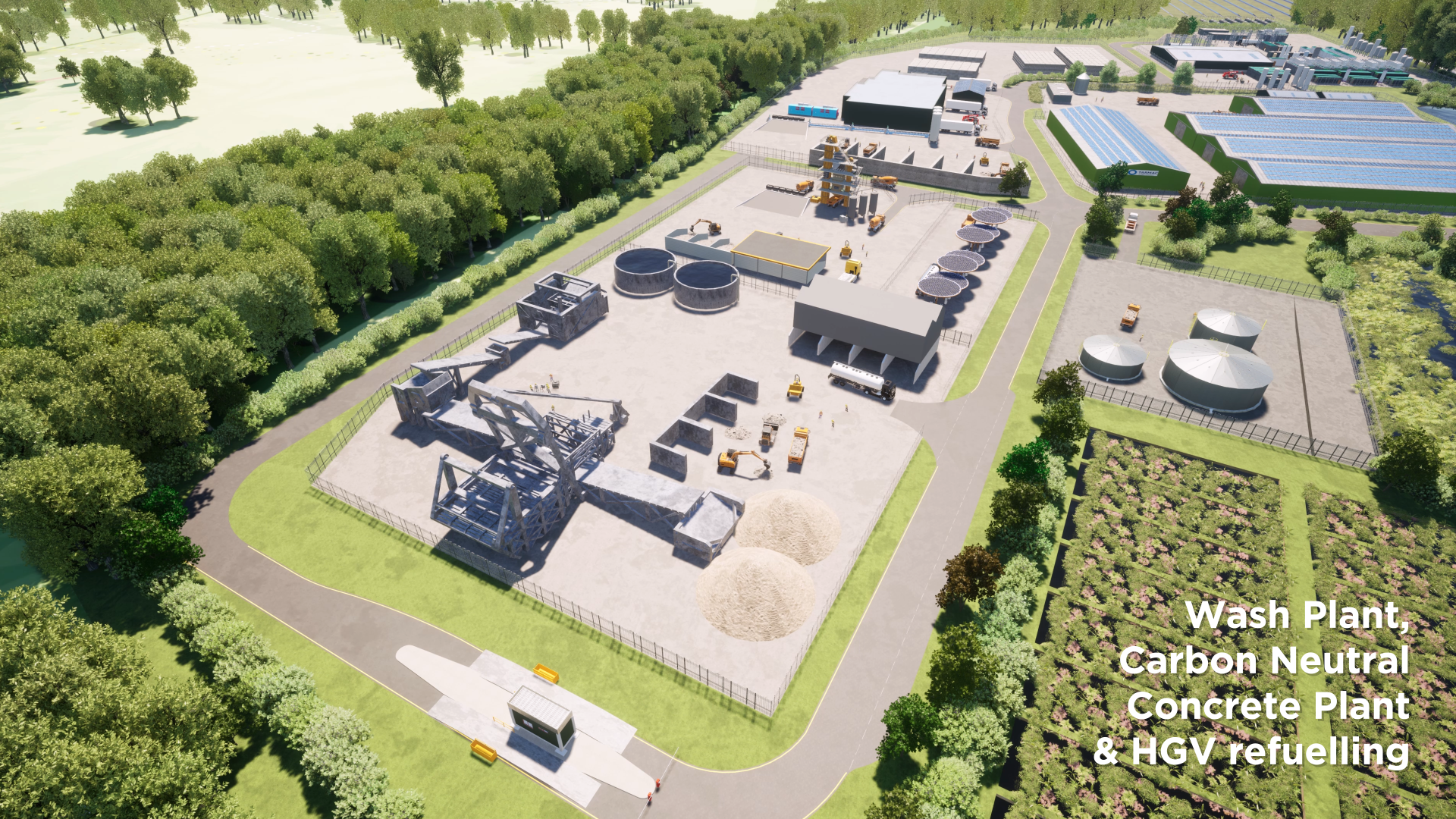
- Initial Sorting and Screening: Inert waste material is fed into the plant and passes over a scalping screen to remove any oversized objects that could cause damage. Powerful overband magnets are used to pull out any scrap metal for recycling.
- Washing and Scrubbing: The material is then washed with water to remove sand. The remaining aggregate (stones and gravel) moves into a logwasher, a machine that vigorously scrubs the material to break down and remove stubborn clay and dirt. Lighter contaminants like plastics or organic material float off, are collected, and sent to landfill.
- Sizing the Final Products: The now-clean aggregate is passed over sizing screens that separate it into the final products (e.g., 10mm and 20mm gravel), which are then stockpiled ready for use. The sand is processed separately through hydrocyclones that use water to remove fine silt, ensuring it meets the required specification
Managing Water: A Closed-Loop System
A key environmental benefit of the proposed aggregate washing plant is its sophisticated water management system, which is designed to recycle and reuse water continuously.
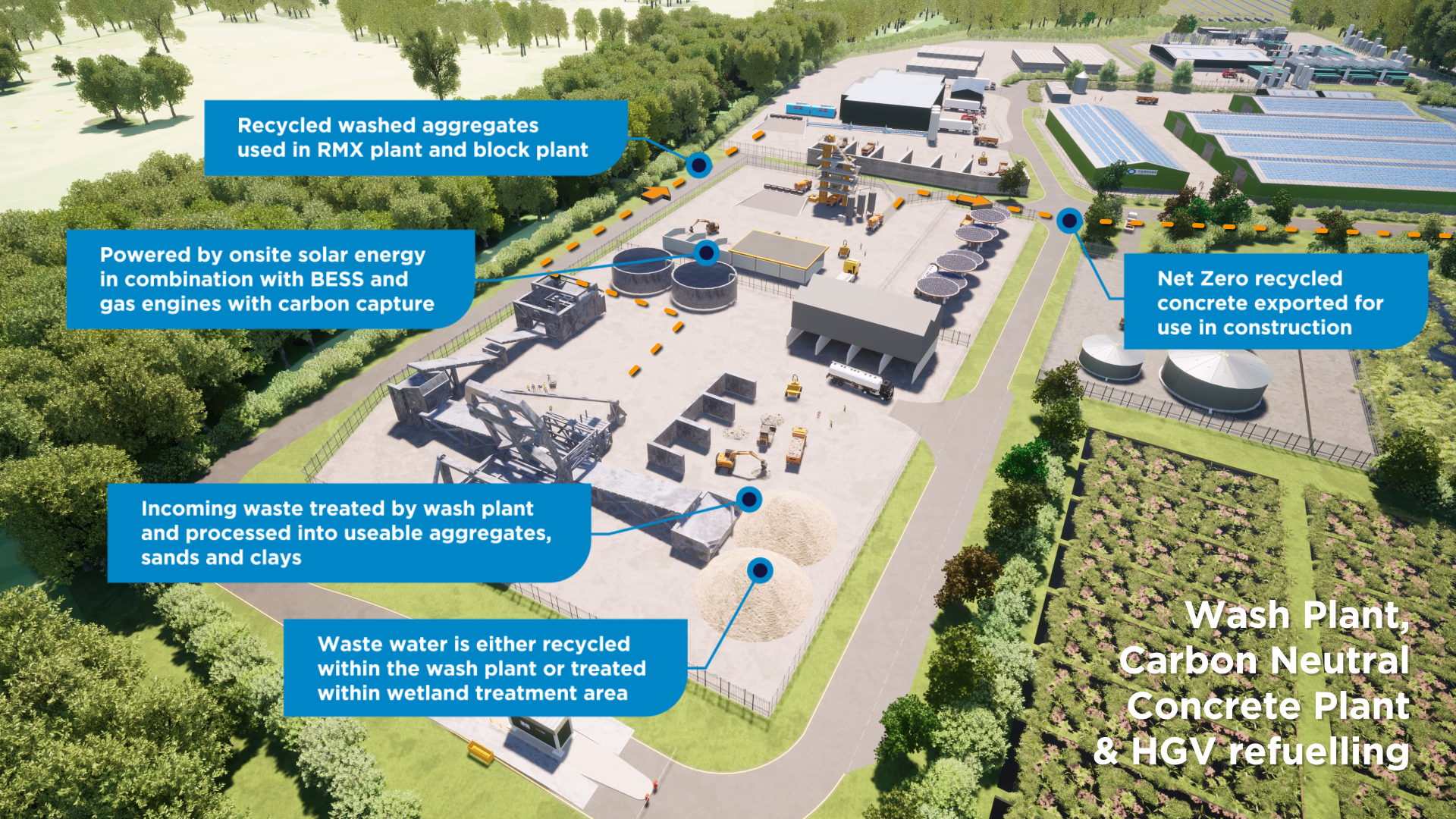
- All the dirty water from the washing process is collected and sent to a large thickener tank.
- A safe chemical (a flocculant) is added, which causes the fine silt and clay particles to bind together and sink to the bottom as a thick ‘sludge’.
- The clean water from the top of the tank is then pumped back to the start of the plant to be used again in the washing process.
- The sludge from the bottom of the tank is sent to a filter press, which squeezes out the remaining water. This creates dry, solid “cakes” of silt that are safe and easy to handle for disposal in a landfill. This closed-loop system significantly minimises the need for fresh water and prevents the discharge of dirty water into the environment. The system will use treated and cleaned water from the adjacent leachate treatment plant as its water source, minimising the need to take from local water supplies.
Site Operations and Impact
The equipment is robust and is expected to have a minimum operational life of 25 years with proper maintenance.
- The plant will be run by a small, dedicated team, estimated to be around three to four people.
- The processing equipment itself has a relatively low noise output. The main source of noise on site is expected to be from the loading shovels used to move material.
- Traffic: The plant is designed to handle up to 100 tons per hour, with C&D waste sourced from the local area to minimise transport distances.

Repurpose, Reenergise, Reinvent our world: Cotesbach 2030
Get in touch:
If you have a question to ask or want to contact a member of our team, please do not hesitate to get in touch with us.
- Email info@cotesbach-development.co.uk
- Call our freephone information line on 0800 699 0081 and leave a voicemail (Mon-Fri, 9am-5pm, excluding public holidays)
- Write to us at FREEPOST TC CONSULTATION (no further address or stamp required)