Green Energy Hub
The vision is to install a combination of renewable technologies that would allow the entire site to generate 100 per cent of its own power, making it independent from the national grid. Crucially, this plan integrates with the on-site WAGABOX® project. The hub will be powered by solar panels, battery storage, and a unique power plant fuelled by the green biomethane produced from the site’s own landfill gas. This creates a truly circular energy system where local waste is converted into clean power for the site’s operations.
Creating a Circular, Self-Sufficient Green Energy Hub
Whats Being Proposed?
The project is a “smart microgrid” that combines three main technologies to provide a constant, reliable source of green power. This includes:
A highly efficient Combined Heat and Power (CHP) system called FLEXPOWER PLUS®. This is the core technology that guarantees power 24/7.
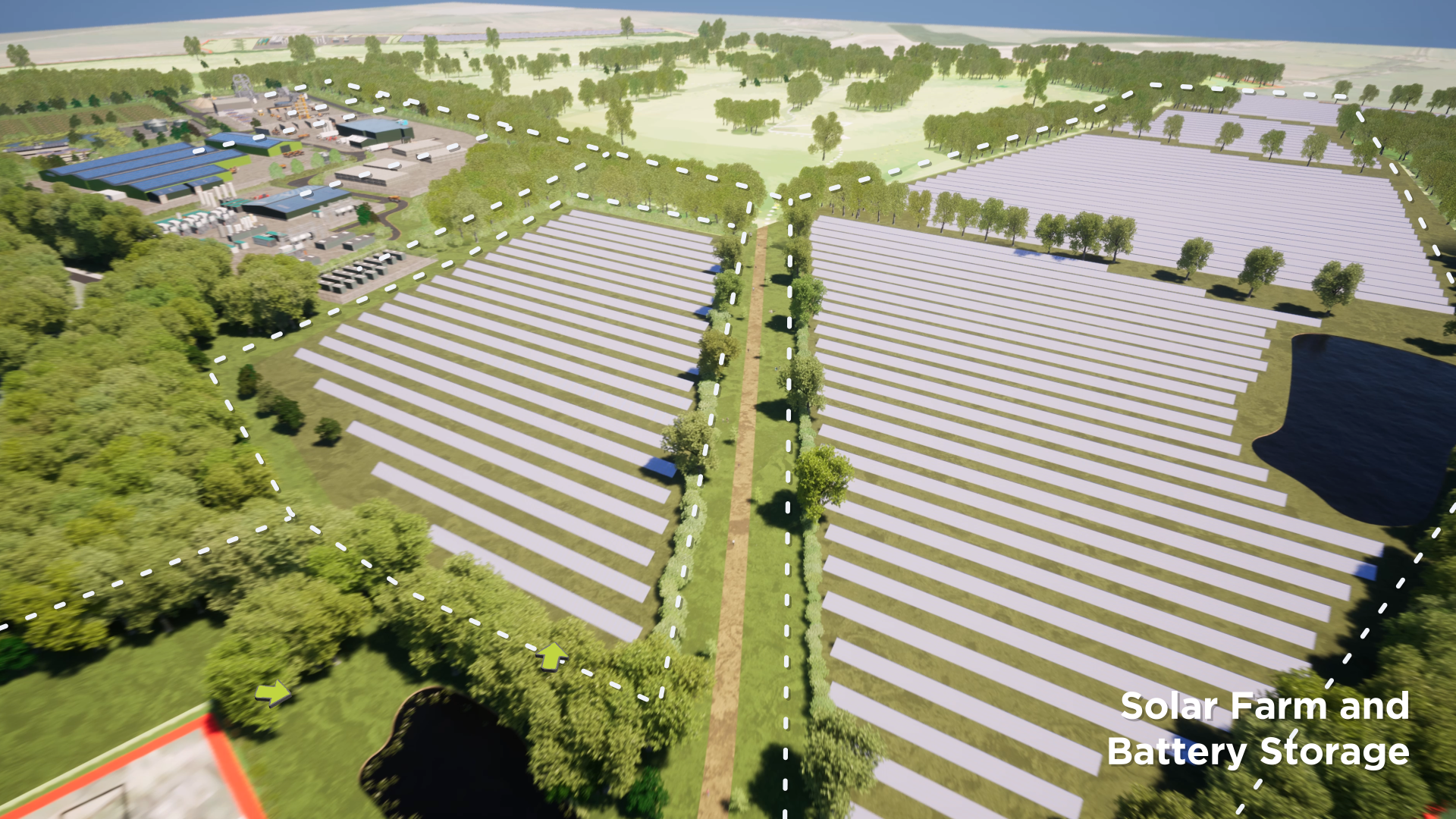
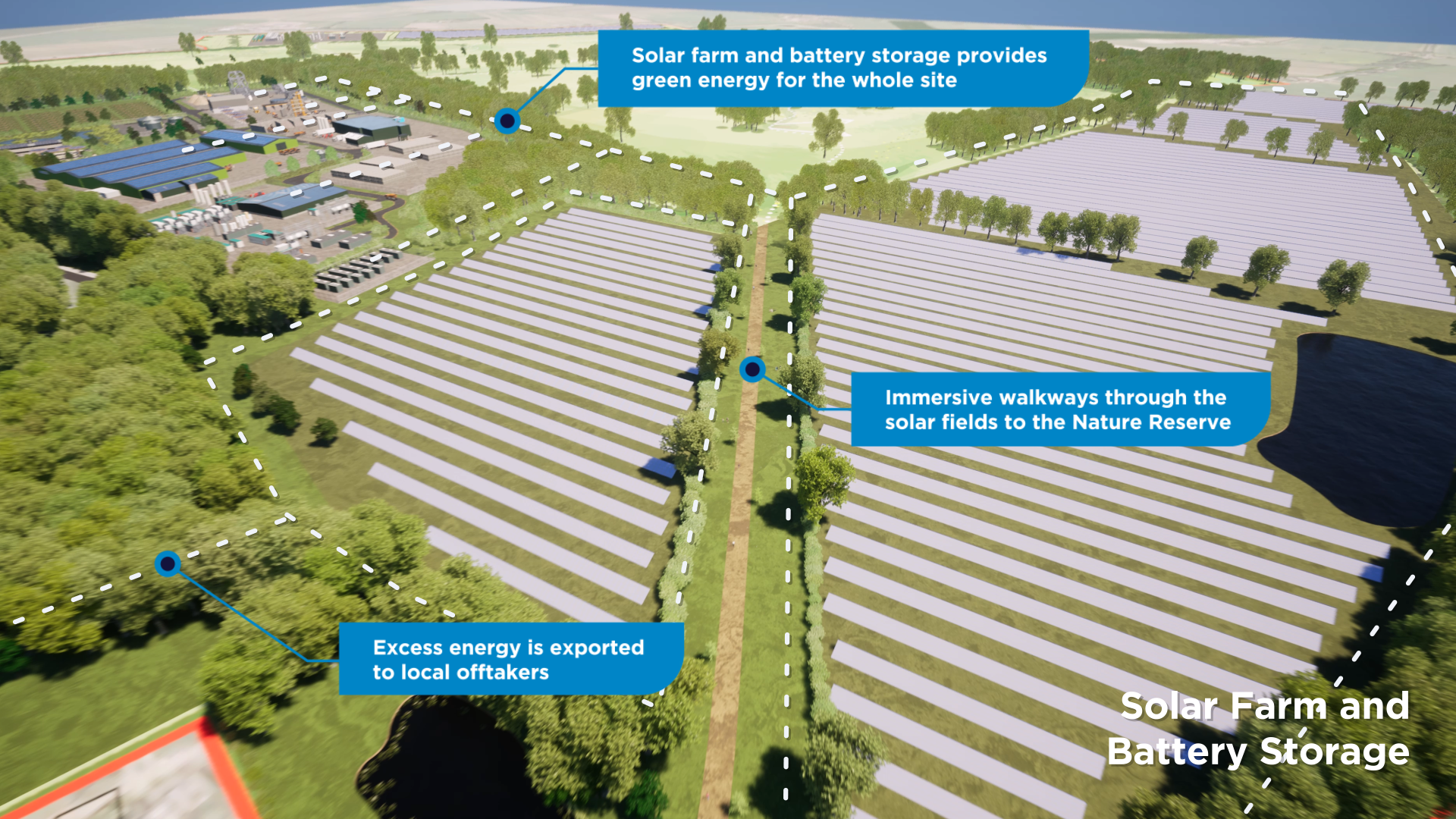
A 30-megawatt (MW) solar installation, with the vast majority of panels mounted on the ground and a smaller section on the facility’s rooftops. This would generate a significant amount of clean electricity during the day.
A 10-megawatt-hour (MWh) Battery Energy Storage System (BESS). The BESS would store excess electricity generated by the solar panels on sunny days and provide power when it’s dark or cloudy, ensuring a stable supply. It can also support future needs like rapid EV charging and protect the site from power cuts.

FLEXPOWER PLUS* works in two main phases
Phase 1: Ultra-Efficient Electricity Generation
- The system is powered by reliable Rolls-Royce MTU engines running on the renewable biomethane produced by the site’s WAGABOX® unit.
- The system is incredibly efficient because it recycles waste heat to make more power from the same amount of fuel. Heat from the engine’s cooling water is captured by a special turbine (a Low-Temperature Organic Rankine Cycle) to produce additional clean electricity.
Phase 2: Carbon Capture and Utilisation
- Before any exhaust gas is released, pollutants like nitrogen oxides (NOx) are removed.
- The cleaned gas then enters an ASCO carbon capture system, which uses a specialised process to capture up to 95 per cent of the carbon dioxide (CO2). The hot exhaust heat from the engines is cleverly used to provide the steam needed to power this capture process, further improving efficiency.
- The captured CO₂ is purified to a food-grade standard. This valuable by-product can then be sold for use in industries like food and beverage, turning an emission into a revenue stream.
Putting Cotesbach at the forefront of sustainability and circularity
The energy generated and stored on site will also be able to be exported via direct connections to nearby employment hubs (e.g., Magna Park) to help sustainably meet their energy supply and reduce reliance on the national grid, enabling other industries to grow.
The UK Government has committed to reaching 100 per cent clean power by 2030, necessitating a rapid deployment of renewable energy generation. Our plans for Cotesbach represent a high water mark for the sector, and would set the example for how previously utilised industrial sites can innovate to help meet local and national decarbonisation targets.

Repurpose, Reenergise, Reinvent our world: Cotesbach 2030
Get in touch:
If you have a question to ask or want to contact a member of our team, please do not hesitate to get in touch with us.
- Email info@cotesbach-development.co.uk
- Call our freephone information line on 0800 699 0081 and leave a voicemail (Mon-Fri, 9am-5pm, excluding public holidays)
- Write to us at FREEPOST TC CONSULTATION (no further address or stamp required)