FAQ’s
About the Applicant
Who is Tarmac?
With over 150 years of experience, Tarmac is the UK’s leading sustainable building materials and construction solutions business. We have contributed to some of the UK’s biggest construction projects and are the UK’s leading provider of road construction and maintenance services.
Part of CRH, the world’s leading building materials business, Tarmac employs around 7,000 people across a network of more than 350 sites across the UK. Tarmac is committed to gaining and maintaining the support of local communities through ongoing consultation and engagement. Tarmac currently has around 110,000 acres of land within our portfolio. We ensure that the land we work on is operated efficiently and at the end of its construction phase is not only restored but regenerated, creating a positive, lasting legacy. As part of our commitment to long-term environmental stewardship we have planted over 28,000 trees, and created 128 sites which have been designated as areas of high biodiversity value – with our approach leading to a number of land management, sustainability and restoration award nominations and wins.
Tarmac is dedicated to driving sustainability across all aspects of our operations. Our sustainability strategy, ‘Act’, reflects our commitment to reaching Net Zero as a company. Through this approach, we aim to enhance the environment for future generations and deliver solutions that help create a healthy, sustainably built environment.
You can find out more about Tarmac and our commitment to environmental stewardship in our most recent Sustainability Report (2024), which is available at https://sustainability-report.tarmac.com/
What is Tarmac’s approach to sustainability?
Our approach to sustainability
Tarmac, a CRH company, is the UK’s leading sustainable building products, construction services and solutions business. Our innovative products, services and solutions help to deliver the infrastructure needed to grow the economy today and create a more sustainable built environment to support the future prosperity of the UK. We are committed to driving forward sustainability efforts across all parts of our business, including focusing on how we can transition our day to day operations to align with the principles of the circular economy. This means designing out waste from every stage of a product’s life cycle and extending its useful life. The transition to a circular economy requires collaboration across the construction supply chain as we seek to eliminate waste from our operations, recycle materials from other industries, and identify opportunities to conserve water and other resources.
We have set ourselves ambitious goals to help measure our progress in achieving our transition to a circular economy within the business, including:
- Zero waste to landfill by 2030
- Recycle and reuse over 70 million tonnes of other industries waste and resources in our processes and products by 2030
- Reduce water consumption by 25% per tonne of product by 2030
- Collaborate to enable material efficiency in project design and delivery
We are already delivering change across our operations to help achieve these targets, however we know we have more to do. For more information on our approach to sustainability, and to see the progress we are making on transitioning to a circular economy, please see our annual group Sustainability Report (2024) .
Tarmac is committed to gaining and maintaining the support of local communities through ongoing consultation and engagement. Tarmac ensures that the land it works on is operated efficiently and at the end of its construction phase is not only restored but regenerated, creating a positive, lasting legacy.
Project details
What is a Solid Recovered Fuel (SRF) plant and how does it work?
Tarmac is proposing to develop a state-of-the-art production facility at the Cotesbach site. This plant will take non-recyclable waste from regional waste management partnerships, and convert it into a high-quality, sustainable fuel known as Solid Recovered Fuel (SRF). This SRF will then be transported using biomethane- or electric-powers HGVs and used as a cleaner alternative to fossil fuels at Tarmac’s cement manufacturing facility in the Peak District, creating an efficient, circular-economy solution for managing waste and energy. The facility is designed to process approximately 200,000 tonnes of imported waste per year.
What is an aggregate/stone-washing plant and how does it work?
The proposal is to build an advanced recycling facility, known as a wash plant, at the Cotesbach site. The plant’s purpose is to take locally collected inert soils, construction and demolition (C&D) waste and process it to create high-quality, reusable construction materials, such as sharp sand and different sizes of gravel (10mm and 20mm).
This facility represents a significant investment in the circular economy, turning materials that might otherwise be considered waste into valuable products for Tarmac to use in applications like concrete production.
What is a gas purification plant and how does it work?
A new gas purification plant would capture the gas produced by decomposing waste within the landfill and convert it into green energy. This landfill gas, which would otherwise be wasted or flared, will be transformed into biomethane—a renewable equivalent of natural gas. This clean, green gas can then be used to heat homes and power businesses across the country via the national gas network, a connection to which already runs through the Cotesbach site.
What is a leachate plant and how does it work?
Currently, Tarmac collects a liquid known as ‘leachate’ from the Cotesbach landfill site. This liquid, a by-product of rainwater filtering through the waste, needs to be treated. At present, this involves loading the leachate into tankers—around 10 lorry loads per day—and transporting it off-site for disposal. This process is costly and has a significant environmental footprint due to the vehicle emissions and traffic. The proposed solution – an on-site treatment facility.
To create a more sustainable and environmentally friendly solution, the proposal is to build a self-contained, on-site water treatment facility. This facility will clean the leachate to a high standard, allowing it to be re-used in other on site processes (e.g., in the aggregate washing plant) or safely discharged through a wetland reedbed system and then into a local river, a plan which we would discuss and agree with the Environment Agency before adopting this approach. The new system is designed to treat up to 300 cubic metres (300m3), or 300,000 litres of leachate every day.
The project will completely eliminate the need for daily tanker transport, reducing traffic on local roads, as well as noise and carbon emissions. The chosen solution uses a combination of two proven technologies: a biological treatment plant and a specially constructed wetland ecosystem.
What is an electric concrete plant and how does it work?
An electric concrete plant is a batching facility that mixes cement, water, and aggregates into concrete using electric-powered mixers, conveyors, and pumps. It works like a traditional plant, but is cleaner, quieter, and more sustainable, especially when powered by renewable electricity as is proposed at Cotesbach.
Think of a ready-mix concrete plant as a large, automated kitchen for baking a cake, but instead of flour and sugar, it uses cement, sand, and gravel.
What is a concrete block plant and how does it work?
AA concrete block plant is a modern, automated facility that mass-produces concrete paving blocks, bricks, and kerbstones used in driveways, pavements, and public spaces. The process is similar to an industrial bakery—precise recipes of aggregates, cement, water, and pigments are measured and mixed to form a stiff concrete “dough.” This mixture is compacted into steel moulds under pressure and vibration to create dense blocks, which are then cured in controlled, humid chambers to achieve their full strength. Once hardened, the finished blocks are automatically packed and shipped to construction sites.
What makes this operation particularly sustainable is its integration within a circular system of materials, water, and energy. Recycled aggregates from the proposed wash plant replace the need for virgin sand and gravel to be quarried, while treated water from the proposed on-site leachate facility would reduce the reliance on mains water supply. Meanwhile, waste heat from the proposed renewables and SRF plant will be able to be used to warm the curing chambers, cutting both energy costs and emissions. Together, these interconnected systems form a “circular construction hub,” where local waste is transformed into high-value building materials, with minimal environmental impact.
What are the benefits of the project?
Our proposals for the next chapter at Cotesbach represent a UK-first, sector leading approach to sustainable waste management and circularity. The proposal represents a multi-million-pound private investment in Leicestershire, demonstrating Tarmac’s long-term commitment to the site and to Leicestershire more broadly, whilst also offering a real opportunity to position the region as a centre of excellence for high skill jobs and training opportunities within the circular economy.
The proposal demonstrate Tarmac’s long-term commitment to the site and to Leicestershire more broadly, whilst also offering a real opportunity to position the region as a centre of excellence for high skill jobs and training opportunities within the circular economy.
At a glance, the benefits of the project include:
- A UK-first in Leicestershire – pioneering a new approach to waste management, recovery, and reuse.
- Less landfill – The Solid Recovered Fuels (SRF) Plant will turn non-recyclable household waste into a cleaner fuel (SRF) instead of sending it to landfill—around 200,000 tonnes a year
- Reduced HGV traffic – it is anticipated that the proposals will lead to a reduction in the number of HGV movements compared to the existing planning permission for the site.
- Cutting fossil fuel use – replacing the use of coal at Tarmac’s cement plant.
- Economic growth – a substantial investment and long-term vote of confidence in the local and regional economies.
- Green jobs – new skilled roles and training for local people.
- Nature recovery – an enhanced nature reserve open to the community, supporting nature restoration and enabling biodiversity to thrive.
How do the proposals represent an investment in Leicestershire?
For over 50 years, this site has served as an important economic asset for the region and wider economy, supporting jobs and supply chains across Leicestershire. Tarmac’s vision for the next chapter at Cotesbach would represent an investment into Leicestershire, and would help to position the region as a sector-leader in circular waste management and sustainable energy production.
It is also estimated that the proposals will create and support temporary jobs and training opportunities during construction and around 50 new full-time jobs once the site becomes fully operational.
During the construction process, the project will also provide economic support for local industries, specifically construction and hospitality. We are committed to using local suppliers during construction where possible, and would be keen to hear from interested parties during the planning process to discuss potential procurement opportunities.
We are committed to working with residents, businesses, and suppliers to identify how best the project can support local jobs and training opportunities and deliver value for the wider supply chain and economy.
How do you intend to cut fossil fuel use?
Our Solid Recovered Fuel (SRF) plant will divert residual waste away from landfill and convert this into useable fuel, which will be transported to our cement works in the peak district and replace the use of coal.
Tarmac will also be transitioning to a fleet of EV or biomethane-powered HGVs powered by on-site green energy generation, minimising the site’s immediate and wider CO₂ footprint. The circularity hub will have its own lorry and vehicle EV charging area, incorporating a driver co-ordination centre, offices, and depot.
How will the proposals support the transition to net zero?
At the centre of our innovative plans to modernise the Cotesbach site is clean, green, and sustainable renewable energy generation. Driven by the integration of a 30MW solar installation and 10MW BESS facility, our proposals would not only ensure that on site operations can be self-sustaining, but would also have the potential to be exported directly to neighbouring economic hubs (e.g., Magna Park) via direct connections as well.
Generating sustainable, reliable, green energy on-site from waste materials and renewable sources will enable the proposed development to relieve pressure on the national grid, freeing up capacity for other industries to grow. Whilst the on-site solar farm will provide a resilient combined energy system to power the new on-site plants, the SRF and gas purification facilities would produce alternative sources of fuel. This would replace the burning of coal at our cement works in the peak district and enable cleaned biomethane to be plugged directly into the gas network to help power and heat people’s homes.
Through a careful and deliberate design, our plans for Cotesbach will therefore provide a roadmap for reducing the reliance on fossil fuels and imported energy, whilst also providing an exemplar for decarbonisation across waste management and construction.
How will local people benefit?
The project is anticipated to create 50 new jobs and safeguarding more locally and indirectly in the wider supply chain. The jobs and training opportunities which would be created by the scheme will be specialist, skilled positions that will contribute significantly to the local economy.
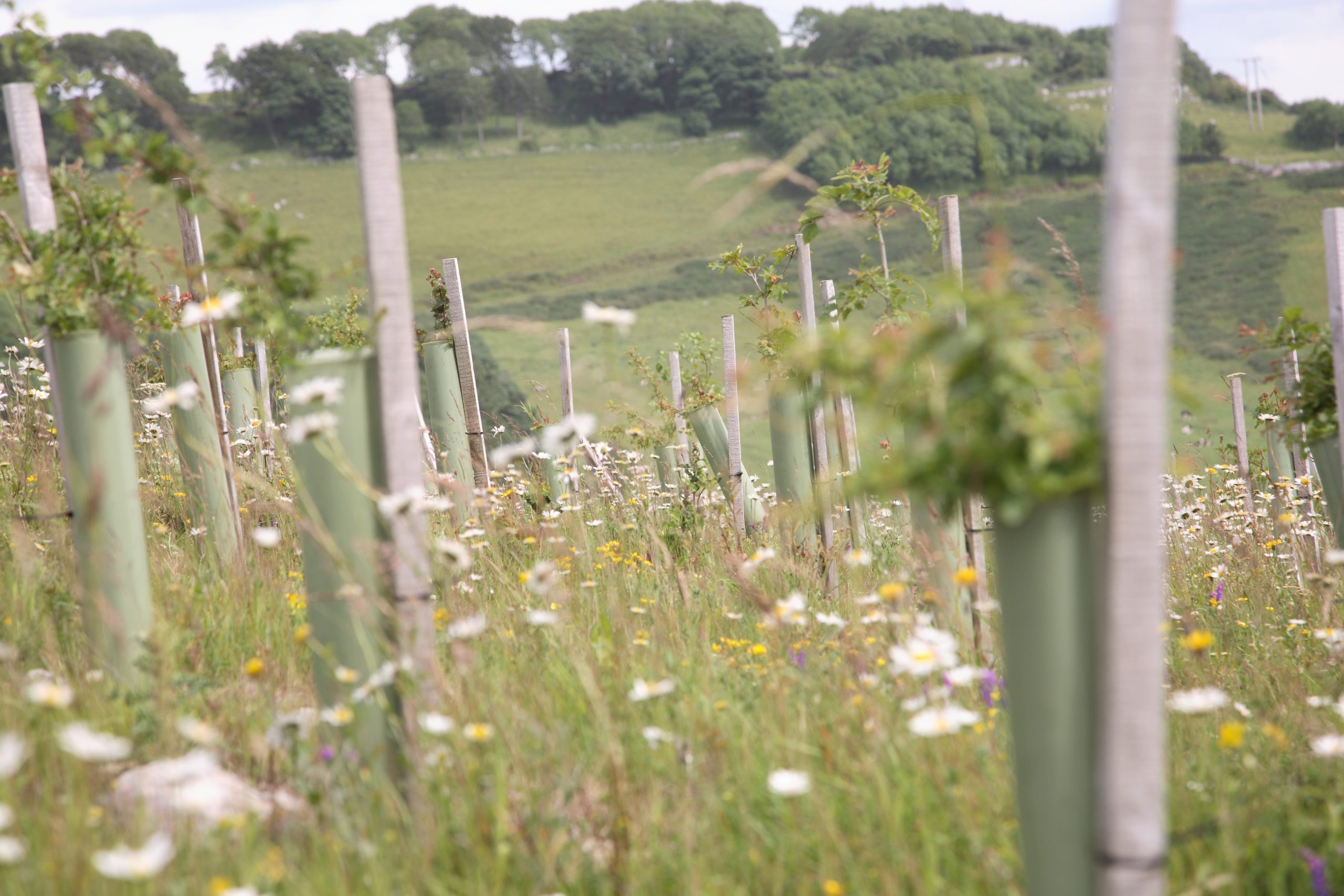
A proposed enhanced nature reserve is at the heart of our vision for the next chapter at Cotesbach. This will promote access to nature for local people through a network of connected new footpaths and recreation opportunities and will bring the site back into public use. Extensive planting of trees, hedgerows and wildflowers is also proposed within the nature reserve, and across the entire site, ensuring that the future for Cotesbach is driven by nature-led recovery and support biodiversity.
Background to the proposals
Where is the site?
The Cotesbach site is situated in south site is situated Leicestershire, near the villages of Cotesbach and Shawell, to the north-east of Rugby. The site extends to approximately 146 acres, although the development area itself will cover a small portion of the site, and will be contained on already developed land – no previously undisturbed land is proposed to be developed as part of this project.
Why are you bringing forward these proposals now?
For over 50 years, the site has served as an important asset for the region and wider economy, supporting jobs and supply chains across Leicestershire. The site is nearing the end of its operational lifespan as material reserves reduce, with all quarrying operations currently set to end in 2044. With local planning policy making it clear that no new landfill sites will be permitted in Leicestershire, our proposals present a unique opportunity to set out a new model for circular waste management within Leicestershire and to act as a benchmark for the delivery of a sustainable and productive future life for similar sites across the UK.
What do the proposals include?
We are proposing a suite of complementary facilities, co-located on the existing site footprint, including:
- Solid Recovered Fuel (SRF) plant to divert residual waste from landfill and replace fossil fuels at a nearby cement works.
- Advanced aggregate washing and concrete plants to recover construction materials and support local, regional and national building projects.
- Gas purification plant to turn landfill gas into biomethane for 8,000 homes and catering-grade CO₂ for industry.
- Leachate plant to treat byproduct from the existing landfill, leaving water which will be able to reused in the aggregate washing plant.
- Solar farm and battery storage providing resilient, renewable power for on-site operations.
- An enhanced nature reserve which will be opened up to the local community, which will promote nature-led recovery and support biodiversity.
Together, these facilities will cut waste going to landfill, generate clean energy, and reduce HGV trips by processing, recovering, and re-using materials on-site.
Why are you developing this project here?
Cotesbach is uniquely situated as one of the few sites in the UK with the right infrastructure, history, and strategic transport links to host this type of sector-leading project.
With local planning policy outlining that no new landfill sites are planned in Leicestershire, Cotesbach is the county’s long-term solution for managing waste responsibly. Our vision for the next chapter at Cotesbach will transform the quarry and landfill into an exemplar circular economy hub for recycling, clean energy, and nature recovery.
Its central location, within easy reach of the M1, M6 and A5 strategic road network, offer an opportunity to deliver significant investment and support innovation and job creation on an already well-connected site which is ideally placed for a project which requires connectivity. We are also proposing to utilise Rugby railhead as the central transport hub within our plans, and we will look to use this to minimise HGV movements to the site from the wider UK market.
Our proposals would mean fewer lorry trips, lower carbon emissions, and better use of local supply chains.
Are these proposals related to the proposed Misterton quarry?
No. The Cotesbach project is unrelated to the proposed new quarry at Misterton and serves a distinct and separate function, both economically and within the wider Tarmac business.
What is a circular economy?
A circular economy is an economic model designed to reduce waste and make the most of resources. Instead of the traditional linear economy (“take → make → use → dispose”), the circular approach keeps products, materials, and resources in use for as long as possible.
At its core, it’s about closing the loop of production and consumption. This involves:
- Designing out waste and treating pollution – creating products that can be reused, repaired, or recycled.
- Keeping products and materials in use – through reuse, sharing, remanufacturing, and recycling.
- Regenerating natural systems – for example, returning nutrients to the soil or using renewable energy instead of fossil fuels.
A simple example: instead of throwing away an old phone, parts could be repaired, refurbished, or recycled into new devices—keeping valuable materials like metals and plastics in circulation.
Will the proposals require a grid connection?
No. All the energy generated by the solar farm will be used to power our operations on site, with excess energy stored via a Battery Energy Storage System (BESS), meaning the proposals require no grid connection.
How long will the site be operational?
The site currently has planning permission up to 2044, and with this application, we are seeking to extend this into the 2060s, securing the site’s role as an important asset in Leicestershire’s sustainable waste management for the next 40 years.
What is happening to the existing landfill site?
Whilst the quarry nears the end of its operational lifespan due to declining material reserves, the current landfill consent runs until 2044.
With local planning policy indicating that there will be no new landfill sites brought forward in Leicestershire, Cotesbach is the county’s long-term solution for managing waste responsibly.
We anticipate that additional time beyond this date may be required, as government and national planning policy encourages recycling and reducing waste streams going directly to landfill without further prior reuse.
The quarry is currently being restored in accordance with the approved quarry restoration scheme.
Impacts of the Development
What impact will the proposals have on traffic, congestion, and the local road network?
Our proposals are designed to avoid adding pressure to the Gibbet roundabout and surrounding area. HGV trips will still be required, but by co-locating and combining plants and processes which complement each other and enable circularity between plants and processes on-site, the proposals will aim to significantly reduce the number of HGV trips required to and from the site compared to the existing planning permission for the site.
We are aware of residents’ concerns about traffic at Gibbet roundabout and are engaging with relevant parties to understand future highways plans for the area. To support this, we have instructed specialist highways consultants to carry out assessments that will inform our planning application.
What mitigations will be in place to ensure that construction traffic is as least disruptive as possible?
Should planning permission be granted Tarmac would agree a Construction Traffic Management Plan (CTMP) with Leicestershire County Council. This document will set out traffic management procedures for the duration of the construction period, including strict guidelines for contractors to ensure that disruption to local residents is kept to a minimum.
The CTMP will also set out the number and type of construction vehicles expected throughout the construction period, as well as the designated construction routes.
The roads locally are in a poor condition and will likely deteriorate further if the project is approved – what action will be taken to improve the surfaces of local roads?
Prior to the commencement of construction, we will carry out a road condition survey on the proposed construction route which will be used to assess any impact from construction vehicles. We will seek to work closely with officers in Leicestershire County Council’s Highways Department to identify where any financial contributions may be required in order to offset the impact of the proposed development on the highways network. If approved, and once fully in operation, we anticipate a lower overall impact on local highways.
When do you expect construction to begin and complete?
Should planning permission be approved we are keen to bring forward the new chapter for Cotesbach as soon as we can. We expect that construction would take 12-18 months to complete. As part of the preparation of our planning application, we will outline how many HGV movements we would anticipate would be required each day during the construction period.
Once operational, how many HGV movements will there be on average per day?
We are focused on utilising Cotesbach’s unique, strategically important location to reduce the environmental impact of these journeys as part of our proposals. Rugby railhead is central to our plans, and we will look to use this important transport hub to minimise HGV movements to the site from the wider UK market.
Whilst we recognise that HGV trips will still be required, by co-locating and combining plants and processes which complement each other and enable circularity between plants and processes on-site, our proposals will aim to significantly reduce the number of HGV trips required to and from the site compared to current levels. This will play a role in reducing congestion on the local highways network and ensure the amenity of local residents is further protected. Equally, where HGV movements ae required, we will be transitioning to a fleet of EV or biomethane-powered HGVs, thus minimising the site’s immediate and wider CO₂ footprint.
A detailed Transport Assessment will be prepared to support the submission of a planning application for the site, which will set out the expected number of trips associated with the proposals, particularly at peak times in the morning and evening.
How will you ensure that pedestrians and vehicles can continue to access the area around the site safely during construction and operation?
Should planning permission be granted, we will agree a Construction Management Plan with Leicestershire County Council to set out how access around the site will be retained during construction. We will also work closely with the relevant Public Rights Of Way (PROW) team regarding any necessary footpath diversions or temporary closures.
How will you ensure that the health and safety of neighbouring households is protected during construction and operation?
Ensuring a healthy and safe environment extends across our supply chain and to every aspect of our business – from the way we manage sites and the way we train and equip our employees and contractors – to the safety features we innovate across our fleet to protect road users.
Tarmac is proud to work with experts in the field of Health and Safety, such as the British Safety Council and The Health and Safety Executive and is also one of the founding partners of a mental health programme for people working in the construction sector called Mates in Mind.
We also operate our National Skills and Safety Park. Dedicated to operational onboarding, professional operational training, assessments and health and safety learning. This industry-leading facility demonstrates our ongoing commitment to a culture of safety excellence.
Our approach is no different at Cotesbach. The site has been quarried for over 50 years, and has been operating as a landfill for 16 years, and the safety of our neighbours has always been, and will continue to be, absolutely paramount. Should planning permission be granted we would agreed a Construction Management Plan with Leicestershire County Council ahead of any construction commencing on the site – this will set out the measures we would take in order to protect our immediate neighbours and surrounding communities from the impacts of construction. Once operational, by diverting waste from landfill and recovering this via our innovative combination of new on site processes, issues such as odour and pests would also be significantly reduced, which will help to address concerns which are commonly raised by local communities.
Will the new plants be noisy?
An assessment of the potential construction noise and vibration effects will be undertaken when the construction programme is known. Construction noise and vibration is temporary in nature, and it is anticipated that, with the implementation of measures to be outlined in the Construction Environmental Management Plan (‘CEMP’), the impacts will not be adverse. In terms of the operational noise impact, it is likely that, with the use of required mitigation measures, the noise levels will not exceed proposed noise limits and should result in a negligible impact.
How will you manage dust and air quality during construction and operation?
Based on the traffic generation, the impacts from construction traffic on local air quality will be negligible and occur for a transient period of time. All existing dust and air quality management plans which Tarmac has in place for the Cotesbach landfill site will remain active, therefore, it is reasonable to conclude that the overall effect on local air quality will not be significant.
How will you control odour and pests?
The proposed Solid Recovered Fuels Plant (SRF) will not be accepting ‘wet’ domestic waste streams that have the potential to promote flies, which will help to address concerns which are commonly raised by local communities.
Should planning permission be granted for the proposals all existing pest management plans which Tarmac have in place will remain active, ensuring that this issue contains to be dealt with as effectively as possible.
Who will be responsible for monitoring the landfill site moving forward?
Under the existing planning permission and permit application the Local Planning Authority and the Environment Agency retain responsibility for monitoring the landfill site.
What sort of emergency planning has been put in place if there is a fire or an accident on the site?
Landfill and waste sites like those operated by Tarmac are highly regulated in the UK under the Environmental Permitting Regulations (EPR) and Health & Safety law.
Fire Prevention Plan (FPP): Every landfill and waste management site must have a fire prevention plan approved by the Environment Agency. This sets out:
- How fire risks are reduced (separating combustible wastes, limiting stockpile sizes, rotating waste to avoid heat build-up).
- Fire detection and alarm systems.
- Location of fire-fighting equipment (hydrants, hoses, extinguishers, fire water lagoons).
- On-site trained fire marshals and emergency drills.
What measures will be implemented in the Battery Energy Storage System (BESS) to minimise fire risk?
Tarmac recognises the use of batteries (including lithium-ion) as Energy Storage Systems (ESS) is a new and emerging practice in the global renewable energy sector. We are consulting with Leicestershire Fire and Rescue (LYFR) to better understand any risks that may be posed and develop strategies and procedures to mitigate these risks.
To protect the battery energy storage system, it will be equipped with an FFSS (Fire Fighting Suppression System) inside each container. An FFSS includes a smoke detector, control panel, alarm device, exhaust pipe and bump head. Before gas blow-out, the system controller will send a signal to the HVAC main power switch to stop working as well as isolating the fans and thus achieve fire suppression process. Tarmac will continue to monitor developments in technological and regulatory advancements for BESS to ensure that the final design of the BESS complies with any future amendments to fire and safety standards.
How will run-off from the solar panels be managed?
A surface water drainage strategy will be implemented on site, which will manage the impact of the development on surface water run-off. It will prevent erosion and the release of silt-laden run-off from entering surface water drains, watercourses and ponds without treatment (e.g. earth bunds, silt fences, straw bales, or proprietary treatment) under any circumstances.
Surface water run-off from panels, equipment and access tracks will be directed to permeable Sustainable drainage systems (SuDS) features.
Further surveys will be undertaken and used together with comments received from relevant consultees to further refine and improve the proposals.
What has been done to reduce impacts on Shawell village?
Following community feedback, key circularity operations have been repositioned towards the central part of the site, moving activity further away from sensitive residential areas to the east, particularly near Shawell village.
Do the proposals affect the A426?
Following further review, we have decided to remove all previously identified development from the western land area adjacent to the A426 (formerly proposed for solar and gas reciprocating engines). This area will now be restored in line with the wider nature reserve vision for the site.
Environment, land use, and cultural heritage
How will the proposals preserve and enhance ecology of the site?
Our approach to delivering an exemplar site for sustainability at Cotesbach has been to place nature recovery and biodiversity at the heart of our proposals. As part of our focus on the remediation and repurposing of the existing quarry and landfill at Cotesbach, our plans would deliver a new nature reserve, extending to around 146 acres.
Tarmac is unwavering in our commitment to ensuring that our positive vision for the future of Cotesbach – with the proposed nature reserve at its heart – also promotes access to nature for local people. Through a new network of connected new footpaths and recreation opportunities, we will open up part of the site and bring it back into public use. In so doing, we hope to improve the health and well-being of our neighbours and surrounding communities. Our plans include extensive planting of trees, hedgerows and wildflowers, not only within the proposed nature reserve, but across the entire site. This will help to sensitively reintegrate the site back into the local landscape and create a pleasant environment for people to spend time, exercise, and enjoy themselves.
The proposals will deliver at least a 10 per cent Biodiversity Net Gain, in accordance with the provisions of the national policy, but will seek to deliver much greater improvements to existing, and creation of new, habitats for a range of species – ensuring that the site becomes a fertile haven for local wildlife.
What habitats are being proposed for the restored nature reserve?
The restoration proposals include a diverse mix of habitat typologies, ranging from native hedgerows with species rich buffer zones and developing woodland areas to species rich grassland, emergent scrub and open mosaic habitats, along with wetland planting integrated into the site wide drainage strategy.
Are there plans to link Cotesbach 2030 to wider nature recovery schemes in the region?
Yes. Cotesbach 2030 is well positioned to strengthen the emerging network of sites across this strategically important area for nature recovery in Leicestershire.
What plans are in place to screen the site?
Our proposals include extensive planting of trees, hedgerows and wildflowers across the entire site. This will help to sensitively reintegrate the site back into the local landscape and create a pleasant environment for people to spend time, exercise, and enjoy themselves. This represents a significant improvement over the currently consented restoration plan.
Will public rights of way be kept open and maintained?
Existing public rights of way will be realigned to access onto and across the restored landscape, incorporating new permissive rights of way (walking and cycling) across the site to develop a network of active leisure opportunities. Where required, some may be subject to temporary closure or diversion orders.
What is Biodiversity Net Gain?
Biodiversity Net Gain (BNG) is a conservation approach used in planning and development that ensures a project leaves the natural environment in a measurably better state for biodiversity than it was before the project took place.
Instead of just compensating for environmental damage, BNG requires developers to enhance habitats and ecosystems, delivering more biodiversity overall.
What measures will be taken to ensure effective drainage systems are implemented to ensure that the proposals do not cause flooding locally?
As part of the preparation of our planning application, we will be preparing a comprehensive drainage strategy for the site. By including extensive planting and green spaces across the proposed nature reserve and wider site, rain water will be able to be better retained on site and released steadily into local watercourses.
Consultation, planning and next steps
Have the proposals for Cotesbach 2030 been submitted?
In September 2026 Tarmac submitted a planning application to Leicestershire County Council as the relevant authority responsible for minerals and waste materials. The planning application (ref 2026/EIA/0054/LCC) can be viewed here.
What happens now?
It will now be for the County Council’s Development Control and Regulatory Board to decide whether the planning should be granted. We expect to receive a decision in Winter 2026/27.
Have you engaged with the community?
We held a public consultation on our draft proposals from 15 October to 15 November 2025. Tarmac thanks everyone who took the time to engage with the consultation and to share details about the next stage of our plans to modernise operations at Cotesbach Landfill. This is an important opportunity to help shape how the site evolves in the years ahead.
As part of our planning submission, we will include a summary statement outlining the feedback received and how it has influenced the evolution of the proposals.
LCC will take this into account alongside environmental, technical, and policy factors. While community opinion is not the only consideration in the final decision, it is an important influence on how the proposals are refined and ensures that local priorities are recognised.
Has Tarmac listened to feedback?
After consideration of feedback from local residents, councils, and organisations during consultation, Tarmac has refined the circularity hub design to reduce visual, noise and traffic impacts, improve efficiency, and respond to technical and environmental findings. You can view these key changes by clicking here.
How can I contact the Project Team to find out more and provide my comments?
Tarmac is committed to holding an accessible and transparent consultation, which reaches a wide audience of local residents.
You can get in touch with us in a number of ways, including:
- Email at info@cotesbach-development.co.uk
- Call the project’s freephone line on 0800 699 0081 (Monday-Friday, 9am-5pm, excluding Bank Holidays) and leave your contacts details for one of our team to call you back.
- Freepost at FREEPOST TC CONSULTATION (no further address or stamp required)

Repurpose, Reenergise, Reinvent our world: Cotesbach 2030
Get in touch:
If you have a question to ask or want to contact a member of our team, please do not hesitate to get in touch with us.
- Email info@cotesbach-development.co.uk
- Call our freephone information line on 0800 699 0081 and leave a voicemail (Mon-Fri, 9am-5pm, excluding public holidays)
- Write to us at FREEPOST TC CONSULTATION (no further address or stamp required)