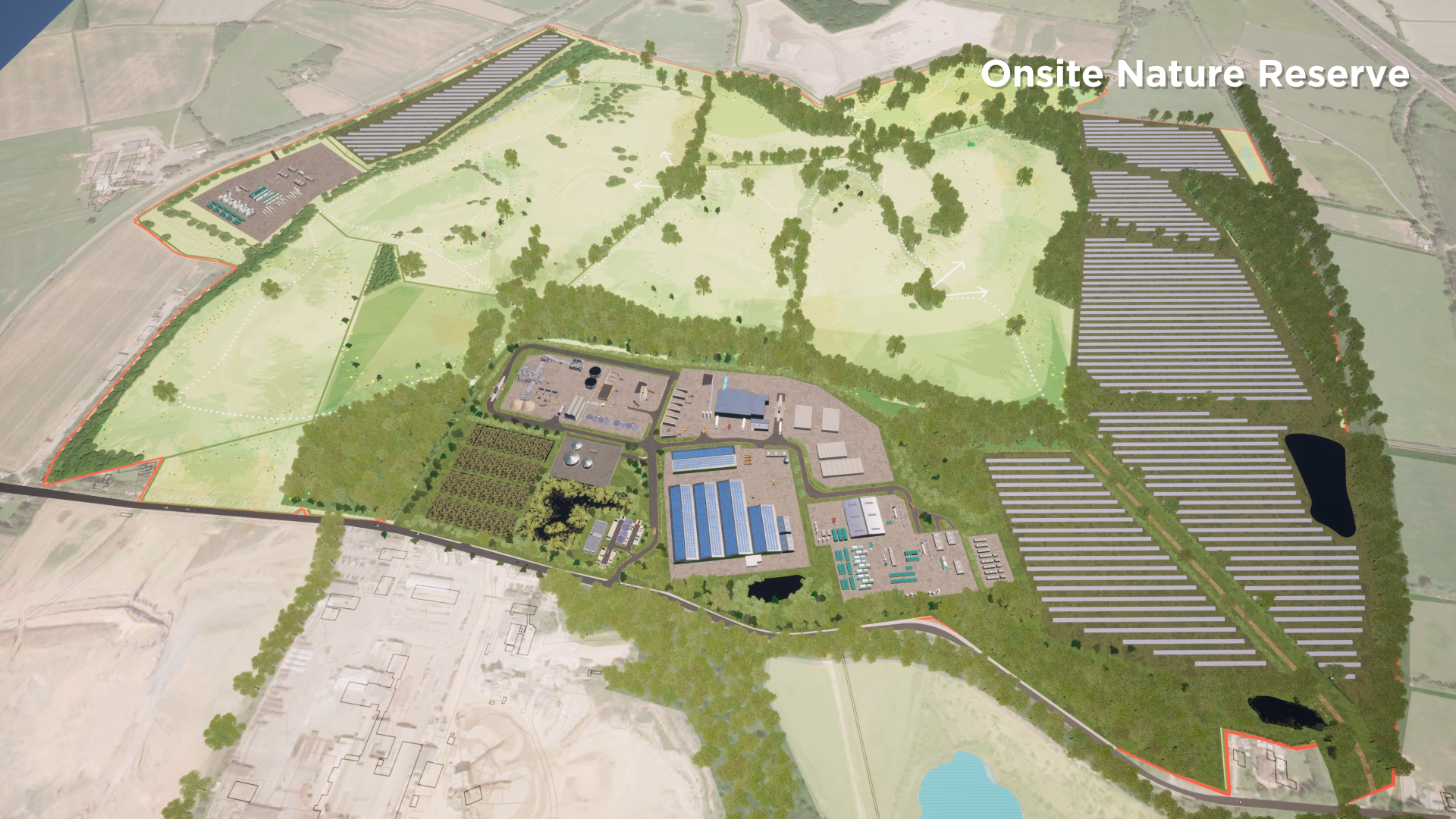
Repurpose, Reenergise, Reinvent our world: Cotesbach 2030
Cotesbach has supported the regional economy for over 50 years. With quarrying due to end and local policy stating that no new landfill sites are to be brought forward in Leicestershire, there is a unique, time‑sensitive opportunity to modernise and future‑proof this critical asset for the next generation.
Tarmac is bringing forward proposals for our Cotesbach site in Leicestershire. Our plans would transform a long‑serving quarry and landfill into a UK‑first, sector‑leading circular economy hub—diverting waste from going to landfill and turning this into resources, generating clean energy, and establishing Cotesbach as a flagship for sustainable waste management in the UK.
What the proposals include
Click on the titles to find out more.
Solid Recovered Fuel (SRF)
Plant to divert residual waste from landfill and create a useable fuel, which will replace fossil fuels at a cement works in the Peak District.
Aggregate Washing
Taking local construction rubble to wash and sort it into new sand and gravel that can be used again and the water is cleaned and reused.

Electric Concrete Plant
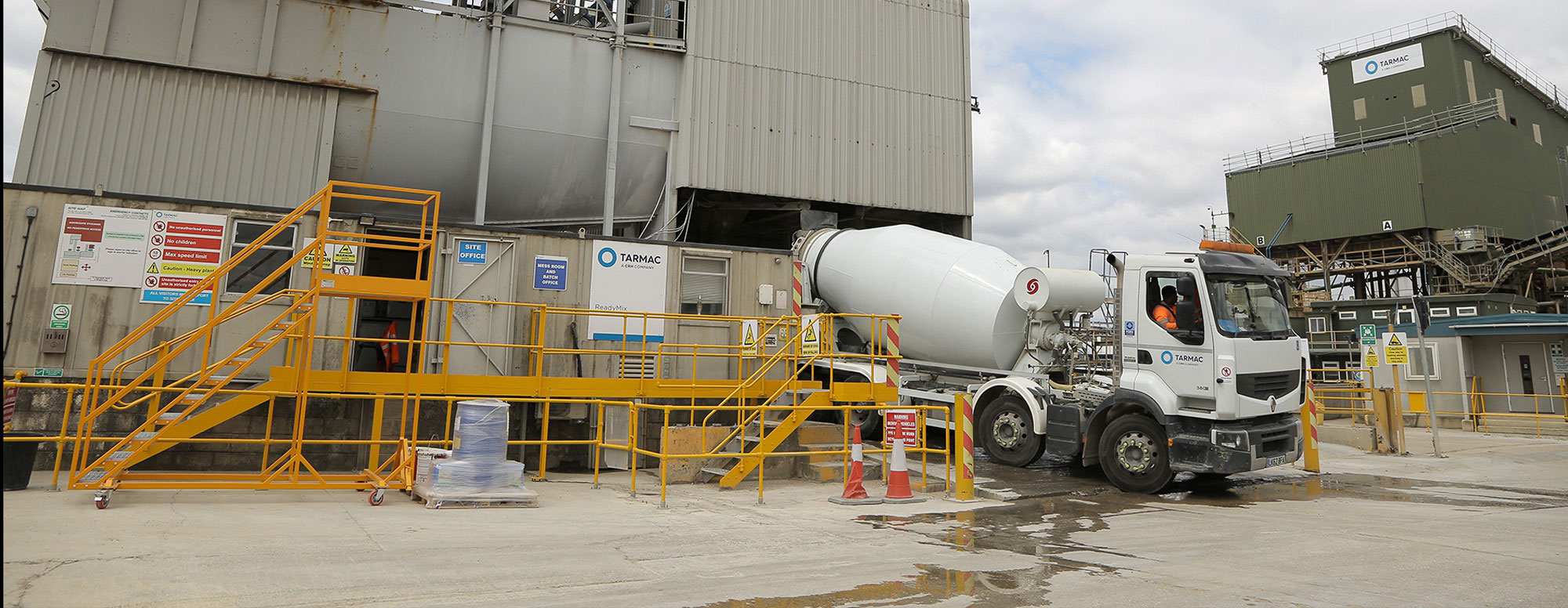
To mix recycled aggregates from the wash plant to make ready-mix concrete. It works like a traditional plant, but is cleaner and quieter.
Block Plant
To mass-produce concrete paving blocks, bricks, and kerbstones — the materials you see on driveways, paths, patios, and in town centres.
Gas Purification
Gas purification to clean the gas produced by the landfill, turning it into useable gas that can go straight into people’s homes, while also capturing the CO₂ so it can be reused to make concrete on site.

On‑site Energy Generation
A combination of on-site power sources that would allow the entire site to generate 100% of its own power, making the site independent of the national grid. This would enable the charging of Tarmac EVs and a future fleet of eHGVs.
Leachate and Water Treatment
Clean by products from the landfill, leaving water which will be able to be re-used for on‑site processes or be sustainably released into the local drainage network with Environmental Agency approval.
Nature Reserve
An enhanced reserve will open up part of the site to the local community through a network of footpaths. Planting of trees, hedgerows and wildflowers across the site will deliver a major boosts to local biodiversity.
Why Cotesbach
This type of proposal can only come forward on a very small number of unique sites, of which Cotesbach is one.
Cotesbach is one of the few sites in the UK with the right infrastructure, history, and strategic transport links (Rugby Railhead, London Railhead’s, M1, M6, A5) to host this type of sector-leading project.
With local planning policy indicating that there will be no new landfill sites brought forward in Leicestershire, Cotesbach is the county’s long-term solution for managing waste responsibly. Transforming operations at the existing landfill and creating an exemplar circular economy hub for recycling, clean energy, and nature recovery will ensure this strategically important site will continue to be an important infrastructure asset for the next generation.

Our plans for Cotesbach will be a UK-first, bringing together multiple complementary processes which will sit side‑by‑side so that outputs from one become inputs for another. The SRF plant will divert nearly 200,000 tonnes of waste from entering the Cotesbach landfill and will create a useable fuel which will replace the burning of coal in cement manufacture; cleaned landfill gas becomes biomethane for homes and captured CO₂ for industry; treated leachate byproduct from the landfill will be cleaned and reused as water on site; and on‑site renewables power the whole system. This circularity is only possible at an existing waste site such as Cotesbach.
The Cotesbach project is unrelated to the proposed new quarry at Misterton and serves a distinct and separate function, both economically and within the wider Tarmac business. To read more, please click here.
Public Consultation
The public consultation has now closed, following four weeks of engagement with local communities and stakeholders.
The consultation ran from Tuesday 11 November to Thursday 11 December, giving residents, community representatives and local organisations the opportunity to share feedback and local knowledge on the project.
We are grateful for all the feedback and questions received during this period. All responses will be carefully analysed and considered by the project team.
You can still request additional information and ask questions via any of the contact methods outlined below.

Repurpose, Reenergise, Reinvent our world: Cotesbach 2030
Get in touch:
If you have a question to ask or want to contact a member of our team, please do not hesitate to get in touch with us.
- Email info@cotesbach-development.co.uk
- Call our freephone information line on 0800 699 0081 and leave a voicemail (Mon-Fri, 9am-5pm, excluding public holidays)
- Write to us at FREEPOST TC CONSULTATION (no further address or stamp required)